
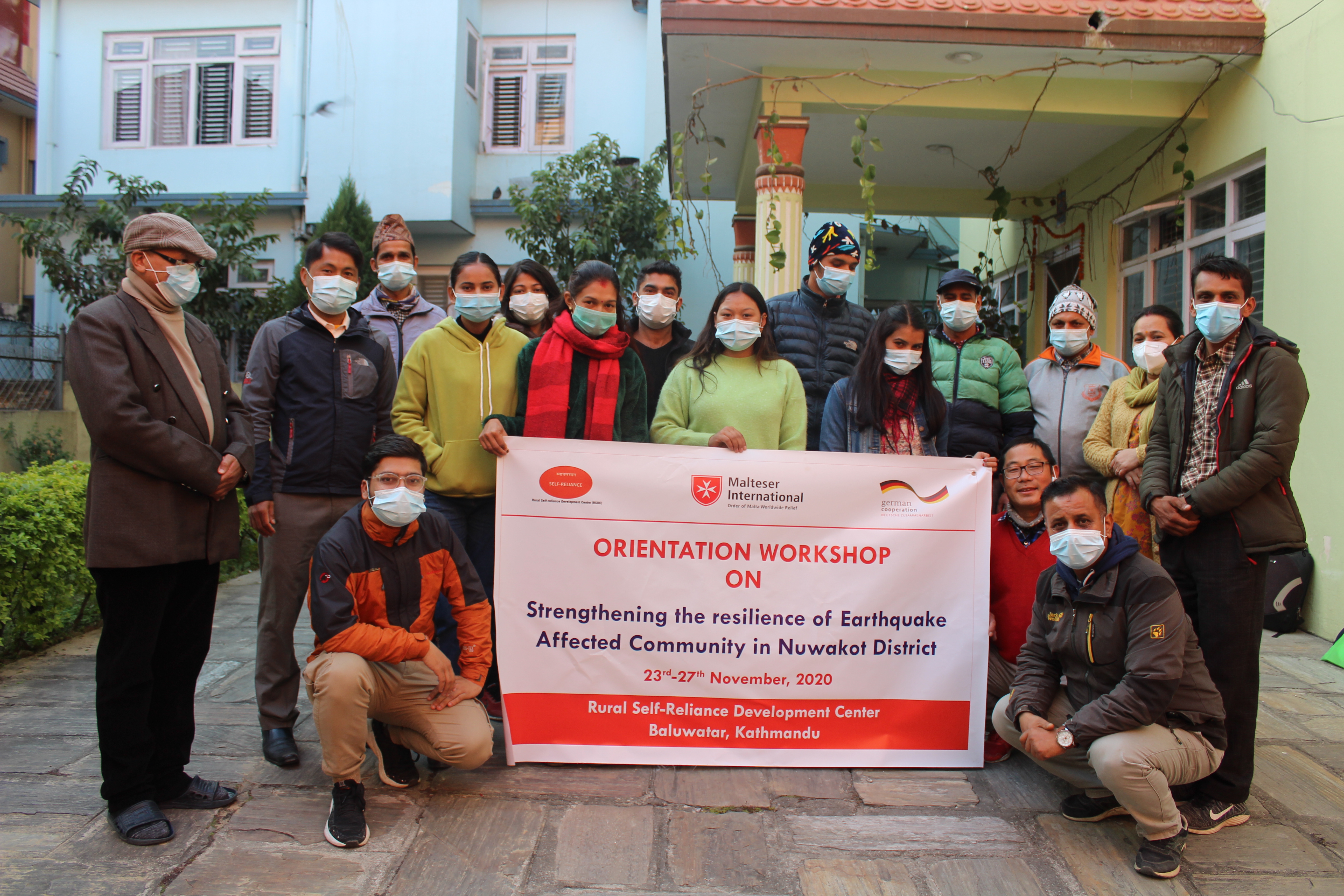
Introduction: The project – Stregthening the resilience of marginalized communities inn Nuwakot district of Nepal was supported by Malterser International (MI).The project was supported from the year 2020 – 2023. Due to the COVID 19 pandemic the program was affected for some time but in now ongoing.
The disastrous earthquake in Nepal on April 25, 2015 hit the region of Nuwakot that damaged life and property in the area. Due to earthquake and after affects such as landslides and floods continued to affected the area specially Panchakanya rural municipality. The municipality consisted of 16,388 inhabitants from ethnic minorities and members of the lowest castes, particularly marginalized and had previously difficulties making a living. The earthquake, as well as its consequences (increased erosion, landslides, water shortage), weak infrastructure and unplanned land use, is leading towards the degradation of already scarce environment .The population lacked the knowledge to increase their production or to develop alternative sources of income. In addition, they needed protective measures to adapt to the situation and precautions against disasters. Shifting of land masses due to the earthquakes heightened soil erosion and landslides.
Methodology/Approach: The swabalamban approach is used for the mobilization of the community into groups. The groups are responsible to undertake all the activities as based on the needs identified by them.
Aim:
The project aims to strengthen the resilience of marginalized communities in Bagmati province in Nepal.
The project aimed to achieved its goal through various interventions through its group approach. The interventions consisted of income generation, water sanitation and hygiene (WASH) and disaster risk reduction (DRR).
Achievements:
- 70 Income generating groups (Swabalamban Groups) have been formed;
- Home garden and off seasonal vegetable farming training has been provided to community members;
- Water testing training has been provided to staffs and they are able to test the coliform contamination in drinking water;
- Five vegetable nurseries have been established;
- Three irrigation systems has been repaired.