
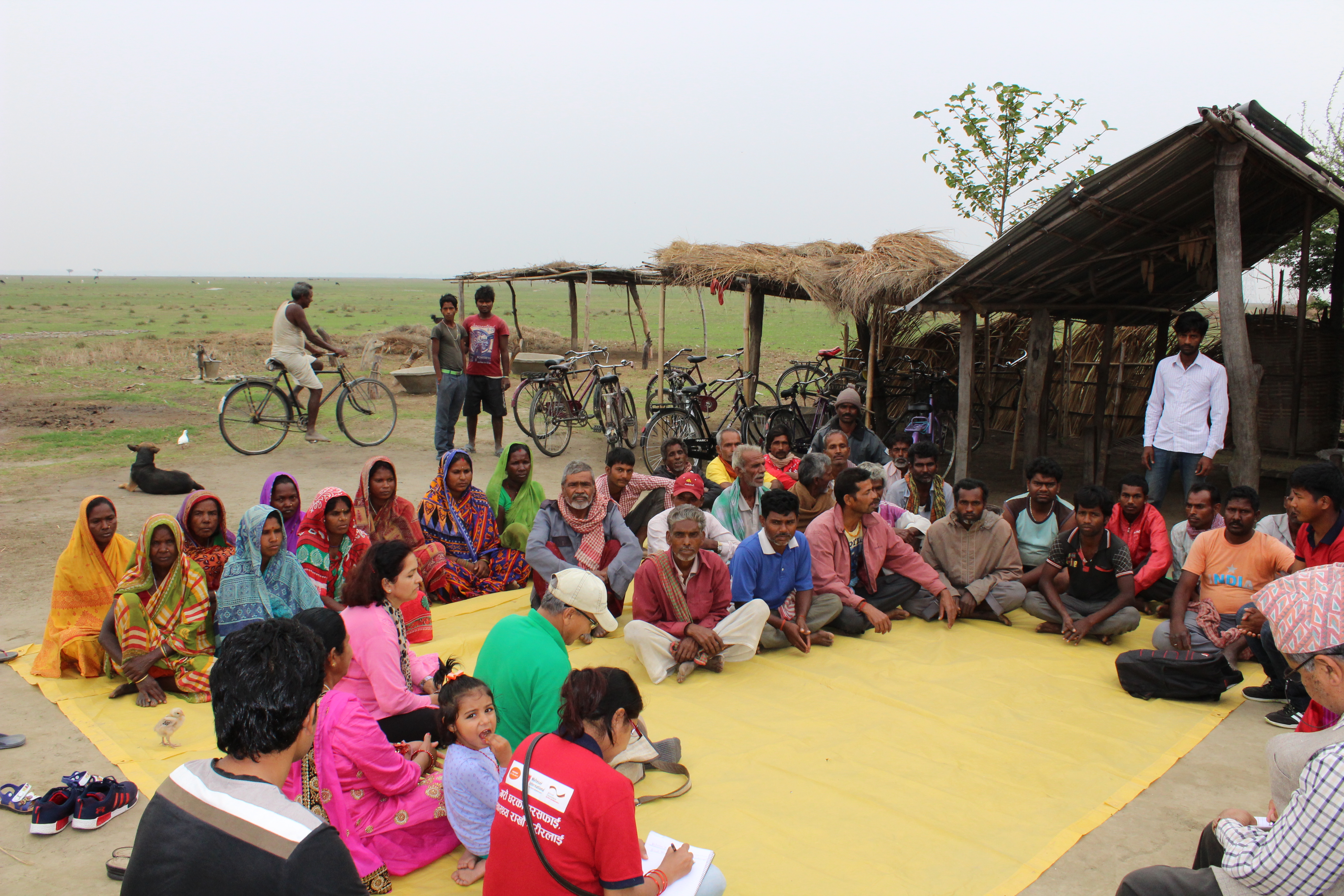
Introduction: Strengthening the resilience of the vulnerable communities’ project was supported by Malteser International (MI) organization to RSDC. The project was the trans-border project implemented in Sunsari district of Nepal and Saharsa NGO in India.The project was implemented from the year 2016 -2019. The focus of the project was to strengthen the resilience of the communities living in the project area affected by the Koshi river that flows from Nepal to the Bihar of India. Every monsoon the Koshi river is flooded leading to desertification, sedimentation and loss of productivity of the agriculture land due to the river bank cutting from the koshi river.
Approach/ Methodology: RSDC followed the swabalamban approach of working in the community by mobilizing the community through group approach. Communities from the flood affected areas were mobilized into group to undertake various activities that would enhance their capacity for disaster preparedness resilience. Multidimensional approach was used as an project intervention. This consisted of improvement on economic, infrastructures, health, and sanitation to improve the livelihood of the distressed community. Several vocational trainings have facilitated the members to generate income utilizing the knowledge acquired.
Aim: The project aimed to strengthen the resilience of the vulnerable communities for disaster preparedness and risk reduction.
Achievements:
- 115 IGGs covering 3010 households, each representing poor, marginalized and vulnerable communities out of which 50% female groups formed and functional;
- Project beneficiaries (3010 households) income increased by 27% annually through the project intervention ativities;
- IGG members adopted innovative techniques in agriculture farming such as sack farming, poly house farming, plastic mulching to improve their livelihood options;
- WASH conditions improved in the project area due to the construction of hand pump (2,860) for drinking water. Low cost sand filters were installed to treat iron contamination in the drinking water;
- Construction of toilets (raised platform ) with flood specific design increased use from 67.9% - 93% improved the sanitation situation;
- 90% household in the project area are practicing hand washing that was not done prior to project intervention;
- Extensive education and awareness campaign on WASH included water quality management training, Hygiene Promotion, Reusable sanitary Pad making training, latrine use and maintenance and water tank distribution improved health ad hygiene in the community;.
- The adaptation to special farming practices like sack farming, polyhouse, plastic mulching, use of local pesticide, vermin-compost and pit compost aided to reduce the cost of production and dependency on chemical fertilizers while increasing crop yield. Shifting to high value crop like Moringa, yam, colocasia, Taro have good market price during the seasons;
- Disaster Management committee formed in both Municipalities. Rescue materials were provided for 15 IGG;
- Development of 18 irrigation systems, fruits and vegetable nurseries, seed money and 4 market centres aids for the sustainable agriculture in the program region;
- Trainings on Riverbed farming, Resilient farming, Home Gardening, Food processing, Group management and leadership strengthen the capacity of community members to improve their livelihood situation;
- Vocational training like house wiring, plumbing (distribution of tool kit to 202 very poor and marginalized communities) has helped to enhance skill of the community members to develop their livelihood skill.