
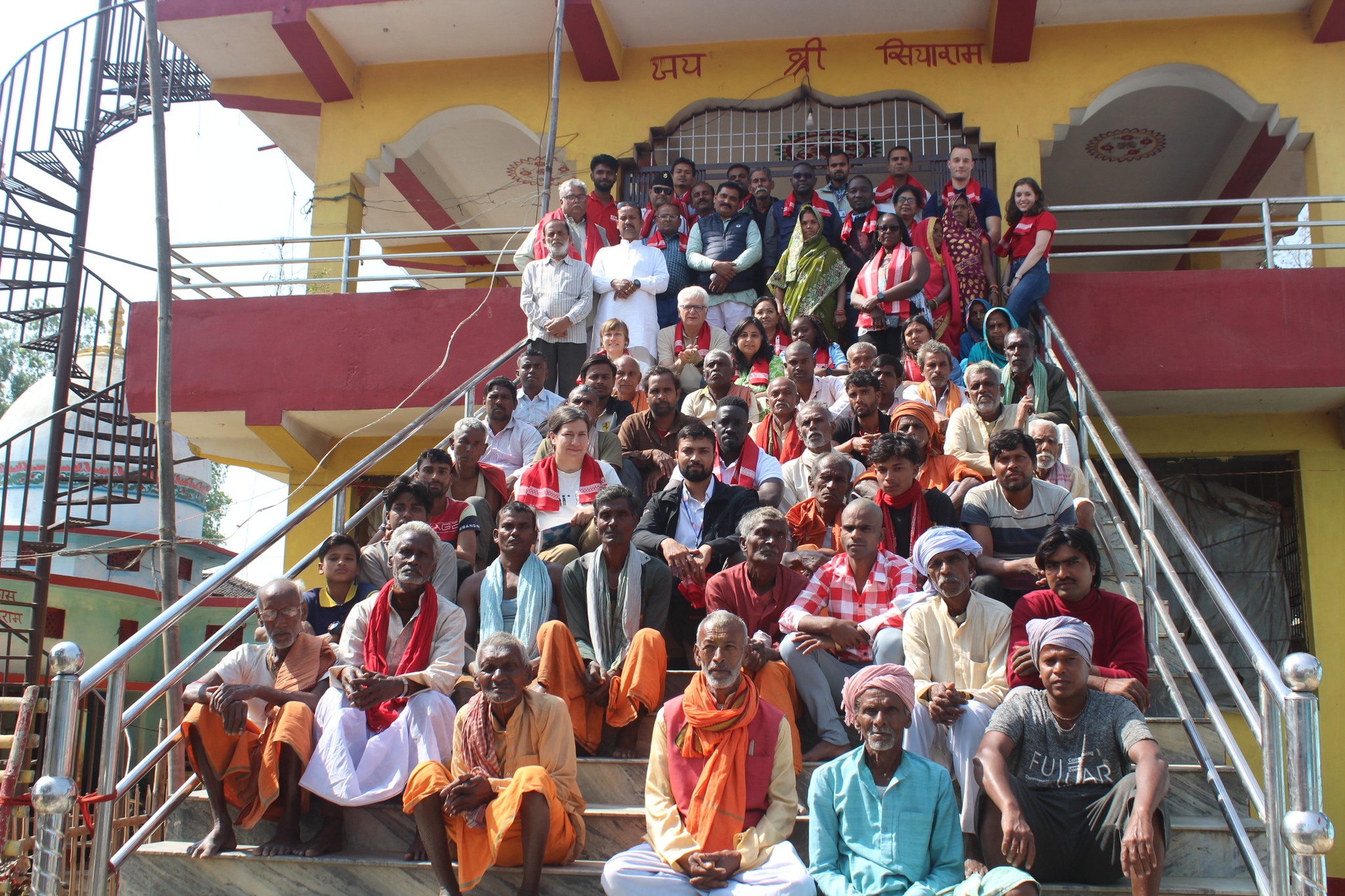
On February 5, 2024, partners of the Global WASH Project conducted a field visit to Dhanakaul Rural Municipality and Balara Municipality in Sarlahi District, Madhesh Province. The delegation included representatives from Germany, Uganda, India, and Nepal, who visited these two out of the four project-implemented municipalities. During the visit, the project partners interacted with local government representatives and Water Users and Sanitation Committees members. Local officials shared the knowledge, skills, and capacities they have gained through the Global WASH Project. According to Krishnanandan Sah, Employment Coordinator of Dhanakaul Rural Municipality, the project has significantly contributed to improving water, sanitation, and hygiene (WASH) services and has played a significant role in the formulation of local WASH plans, introducing new perspectives in the sector.
The project was also credited with raising awareness, building advocacy capacity in underserved communities, and fostering coordination between wards and communities. Mr. Sah highlighted how communities that previously lacked WASH services are now better organized and empowered to demand their rights. Prabin Kumar Singh, Ward Chairperson of Balara Municipality Ward No. 7, noted that the project helped revive inactive water and sanitation committees, which were on the verge of closure. He also shared that due to the project's influence, he included the development of WASH plans in the municipal policies and programs, and after participating in a visit to a successful drinking water project site, he was inspired to prioritize WASH as a top development agenda in his ward.
The partners also held interactive sessions with local resource persons and field staff from all four municipalities. These exchanges helped the partners gain deeper insights into the achievements and progress made by the project. Although there was a strong interest in visiting the other two municipalities in Mahottari District, time constraints and overlapping commitments prevented the site visit. However, the feedback and experiences gathered from the two visited municipalities provided the partners with a valuable understanding of the project’s impact and its role in strengthening local WASH governance.