
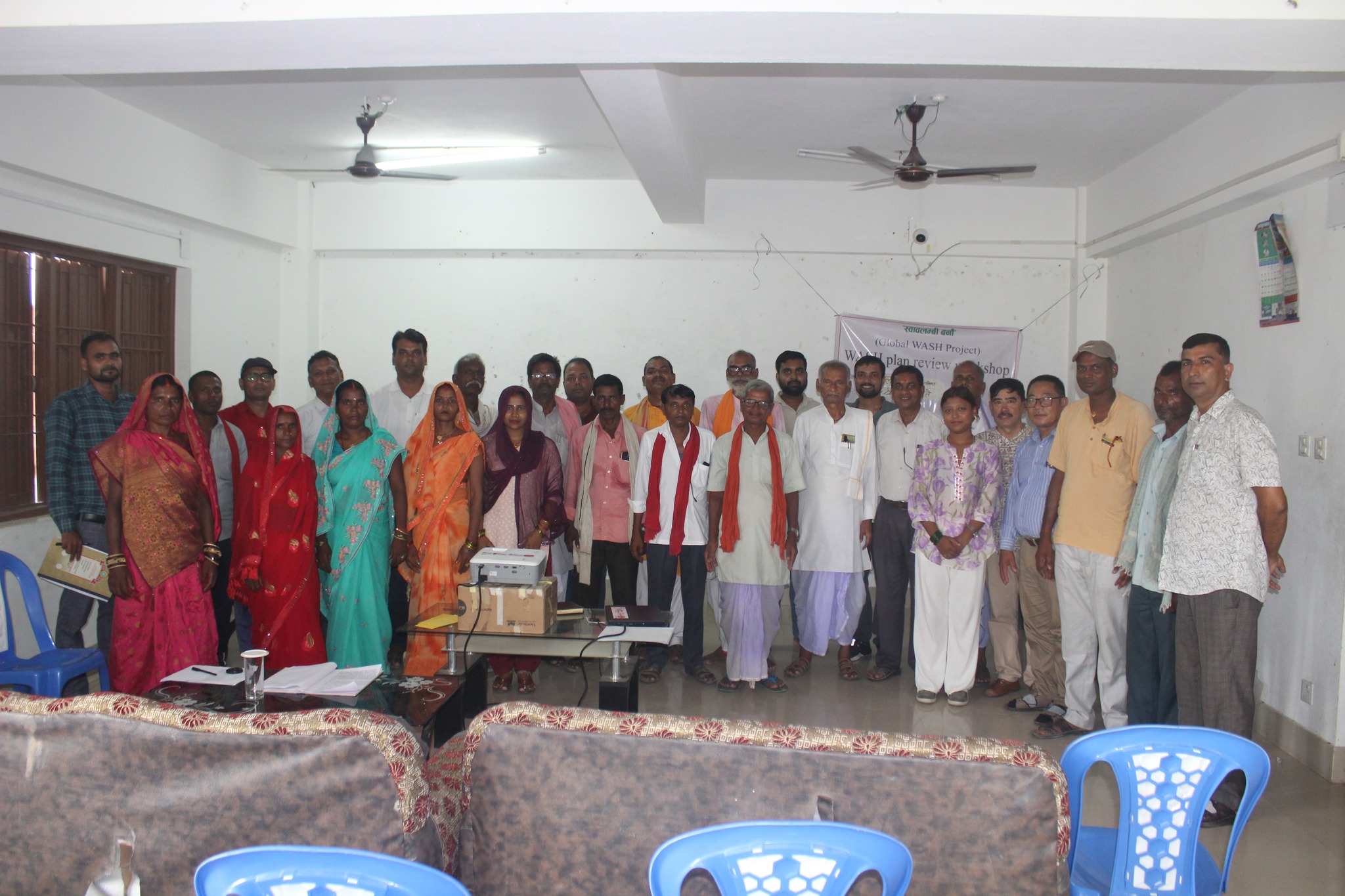
After months of preparation following the national NWASH guidelines, comprehensive Water, Sanitation, and Hygiene (WASH) Plans have been completed to three local governments in Madhesh Province—Dhanakaul Rural Municipality, Balara Municipality (Sarlahi District), and Samsi Rural Municipality (Mahottari District). The plans were reviewed during formal events held on Shrawan 4, 5, and 6 2082 (July 2025) respectively in the presence of local officials, community representatives, and project stakeholders.
These 10-year WASH plans were developed under the leadership of the respective municipalities and Global WASH Project implemented by Rural Self-Reliance Development Centre (RSDC). The plans include data on WASH services, identify key gaps, and provide prioritized actions to improve water supply, sanitation infrastructure, hygiene promotion, and institutional capacity. Local stakeholders discussed sustainable approaches, such as annual WASH data updates, low-cost water solutions for densely populated wards, and the introduction of pilot programs for solid and fecal waste management.
The workshops also emphasized the importance of forming dedicated WASH Units and appointing focal persons in each municipality to ensure coordination, implementation, and monitoring. Participants recommended upgrading WASH facilities in schools and health care facilities, ensuring menstrual hygiene management and disability-friendly infrastructure, and incorporating WASH components into annual and periodic municipal budgets. These efforts aim to support Nepal’s commitment to achieving Sustainable Development Goal 6—ensuring availability and sustainable management of water and sanitation for all.
At the events, local leaders expressed strong commitment to implementing the WASH plans and acknowledged the importance of having a structured roadmap to deliver reliable, inclusive, and sustainable WASH services. They also appreciated the technical and logistical support provided by RSDC and its partners. Despite challenges such as limited budgets and growing community demand—especially in drought-affected areas—local governments expressed readiness to move forward with the plans and advocate for support from provincial and federal levels.