
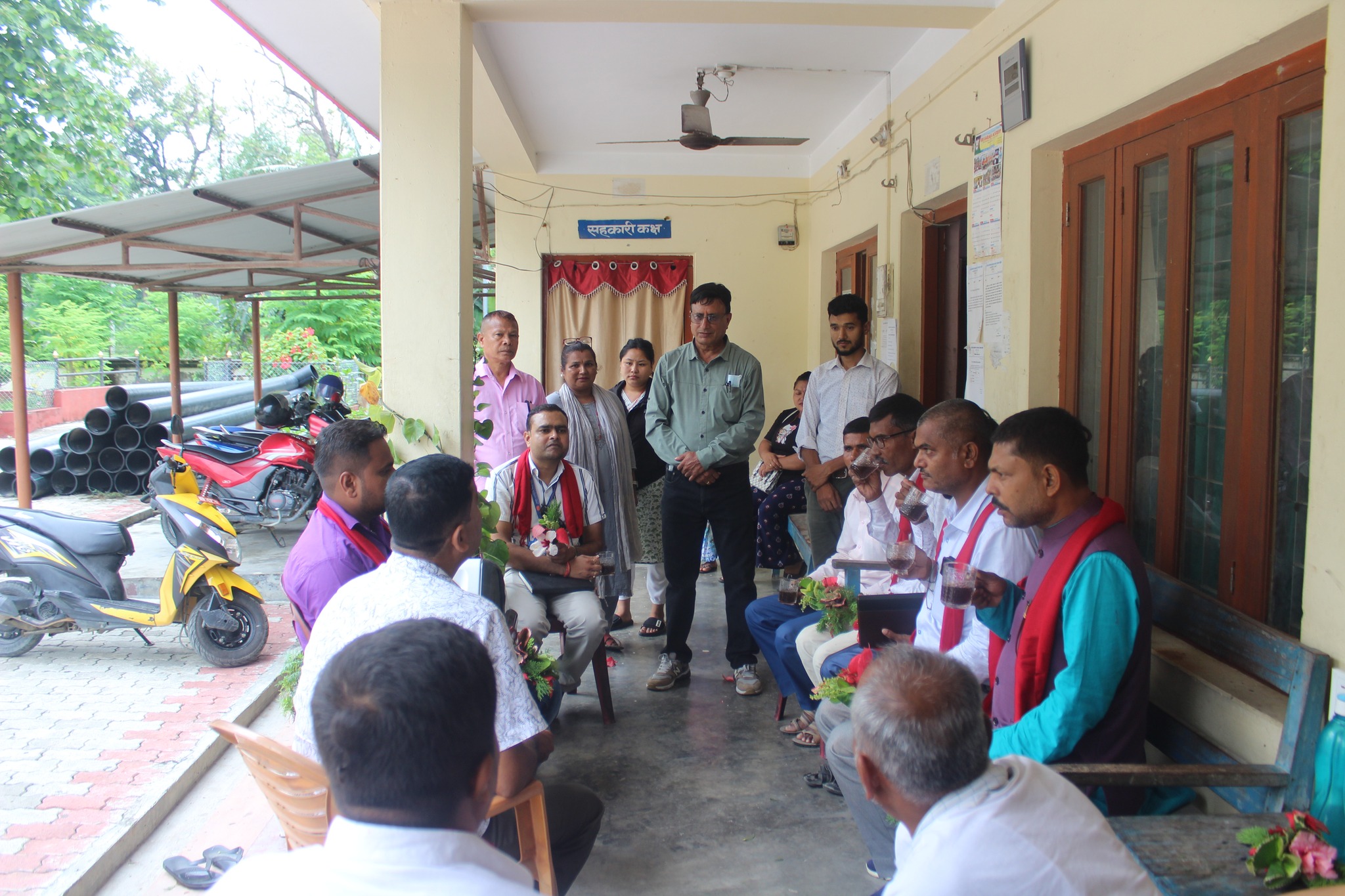
An exposure visit program on WASH system organized by Rural Self-Reliance Development Centre (RSDC) has been successfully completed. The visit was organized under the Global WASH Project, a global initiative being implemented in Nepal, India, and Uganda to ensure sustainable access to human rights-based water, sanitation, and hygiene (WASH) services.
The project areas include Dhanakaul Rural Municipality and Balara Municipality in Sarlahi district, and Samsi Rural Municipality and Manara Shiswa Municipality in Mahottari district of Madhesh Province. A total of 19 local representatives and resource persons participated in the visit.
The main purpose of the visit was to learn from successful WASH practices and help strengthen the technical and transparent management systems in local governments. The team observed activities conducted by the Urabari Water User and Sanitation Committee in Morang district and WASH-related practices in Barahakshetra Municipality of Sunsari district. During the visit, an interaction was held between the team and the Urabari Water User and Sanitation Committee. Committee Chairperson Chintamani Paudel shared the committee’s history, efforts, challenges, and successes. He mentioned that the committee was established in 1995 (BS 2052), and currently operates 10 drinking water projects. The projects are based on a co-financing model with 70% external and 30% local contributions. Under his leadership, the committee built five water tanks and successfully repaid over NPR 30 million in loans.
Participants asked questions about the ESP system, where one of the respondents, Mr. Raju Budhathoki, mentioned it could become costly over time. Mr. Paudel emphasized the importance of unity and non-political collaboration in water services and expressed his willingness to support other local governments if invited. Mayor Rama Shankar Prasad Kushwaha of Balara Municipality shared the WASH challenges in Madhesh Province and highlighted the municipality's commitment to prioritizing WASH in its upcoming 15-year periodic plan. He also thanked RSDC for supporting WASH planning.
The team also observed WASH activities in Barahakshetra Municipality. An interaction was held with Mayor Ramesh Karki, Chief Administrative Officer Ganesh Bahadur Katuwal, deputy mayor, WASH branch representatives, and WASH champions. Ms. Rekha Dhami, from the WASH branch, presented an overview of the municipality's WASH plan, its goals, challenges, and achievements.
Mr. Dipendra Gautam, Global WASH Project Coordinator from RSDC, facilitated the discussion and shared the objectives of the visit. The Barahakshetra team expressed appreciation for RSDC’s past collaboration and invited them to continue their work in the municipality. The team also visited Toribari Water Project in Ward 1 of Barahakshetra Municipality. The project serves 2,500 households through 4 tanks and 5 pumps. The committee chair shared that the system was built to last 50 years and had improved its financial condition from NPR 6 million debt in 2071 BS to NPR 4 million profit by 2082 BS.
Participants also visited Baklauri Wetland Area to observe efforts on water conservation and groundwater recharge. On their return, they interacted with Gadhaiya Agriculture Cooperative in Ward 9, known as "Sri Lanka Island," and learned about RSDC’s previous support to the cooperative. The exposure visit helped participants gain practical knowledge and insights from the successful activities of Urabari Water User Committee and Barahakshetra Municipality.
RSDC has been implementing the Global WASH Project in collaboration with Malteser International for the past two and a half years in Sarlahi and Mahottari districts of Madhesh Province, focusing on sustainable WASH services.